Jewish Community of Larissa – A Journey Through Time
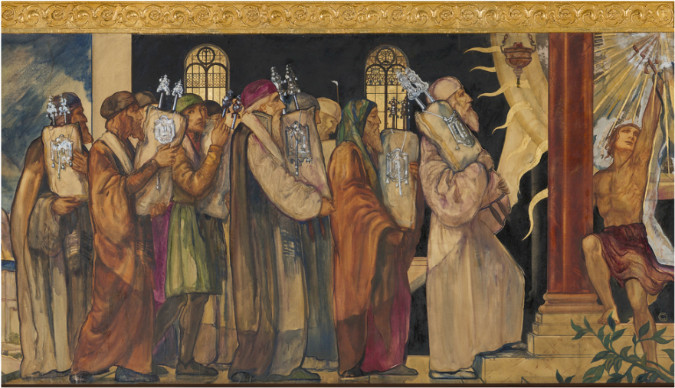
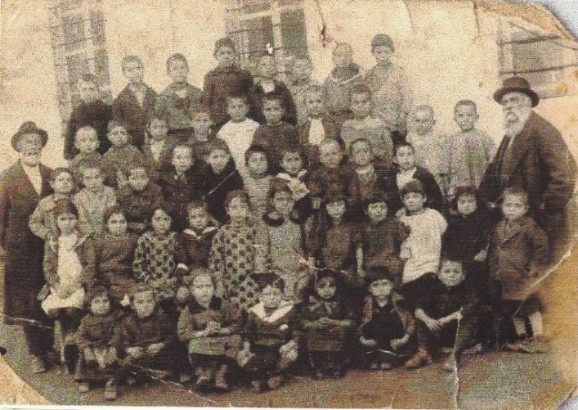
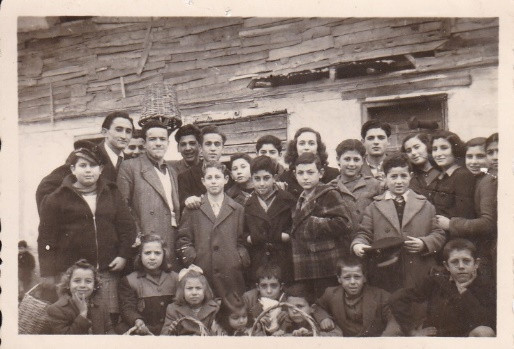
During the Nazi occupation and the Holocaust, the Community was completely destroyed and lost one third of its members in the concentration camps. However, thanks to the solidarity of Christian fellow citizens and the help of resistance organizations, the majority of the city’s Jewish population was saved.
After the liberation, the Jews of Larissa managed to rebuild the Community and pass on its rich heritage to future generations.
Today, the Jewish Community of Larissa, although small, remains active and offers its members a meaningful traditional Jewish life. With devotion to faith, customs, and its Greek identity, it continues to be an integral part of the city’s identity. It carries forward the message that coexistence, historical continuity, and hope for the future are living and timeless values.
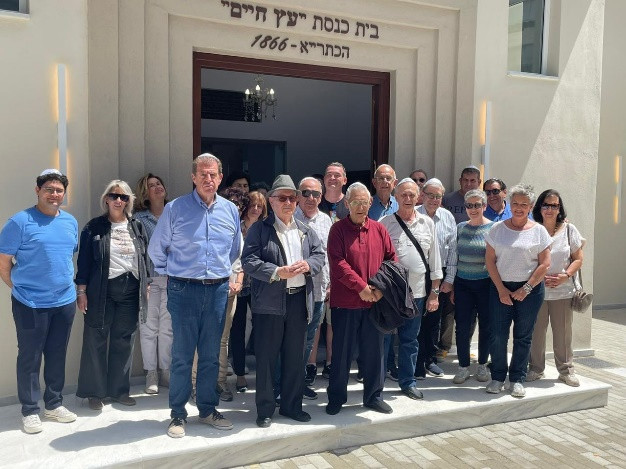
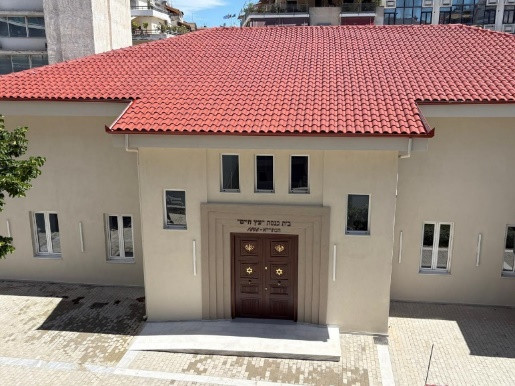
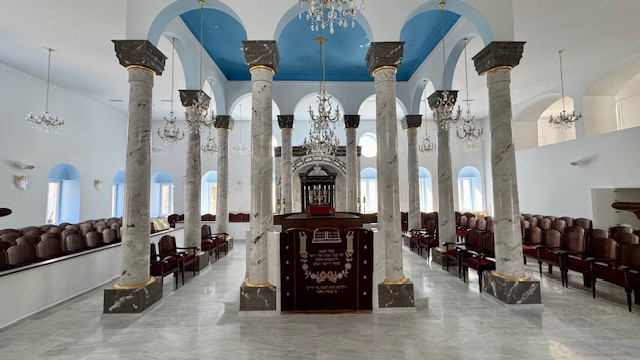
Ets Hayim Synagogue
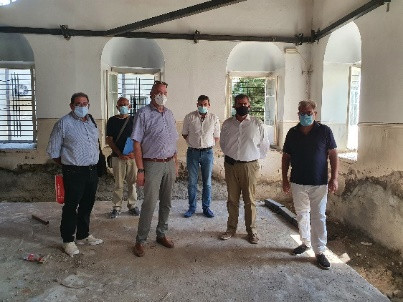
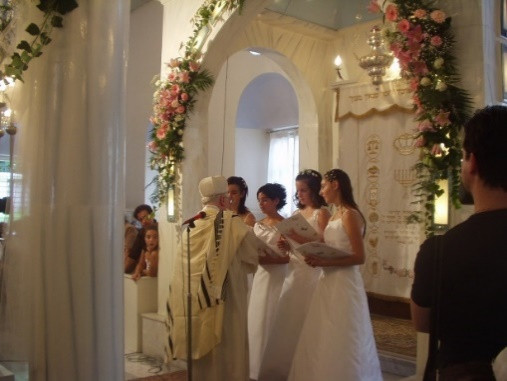
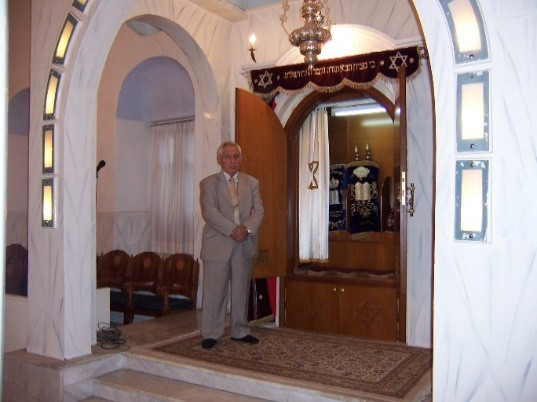
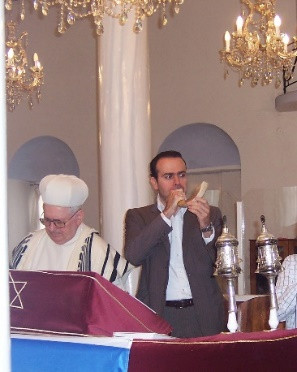
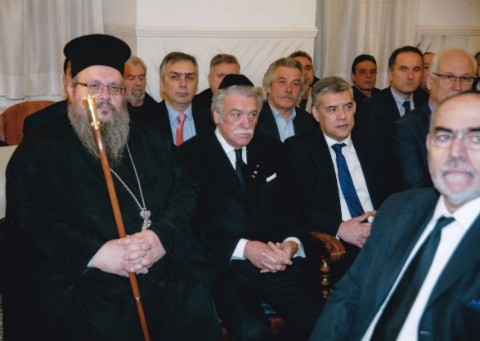
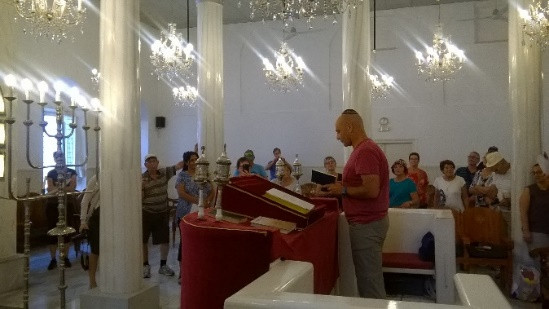
The Ets Hayim Synagogue, under the guidance of wise Rabbis and dedicated officiants, has continuously served as a place of gathering and prayer for the Jews of Larissa. It has always been a “living” temple, with community members of all ages considering it their second home and actively participating in its services.
Today, it operates every Friday evening and Saturday morning, as well as on all Jewish holidays. It also hosts the religious ceremonies of community members, including weddings, circumcisions, bar and bat mitzvahs, and memorial services.
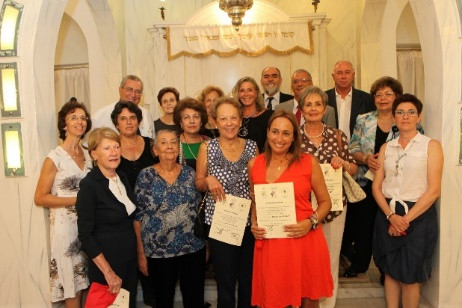
The Synagogue also hosts major events organized by the Jewish Community of Larissa, which are open to non-Jewish fellow-citizens.
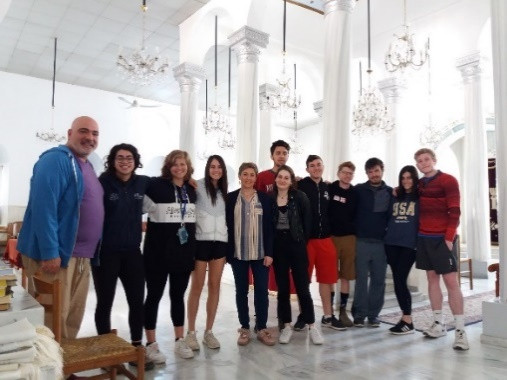
In addition, it frequently welcomes visits from students, university groups, and researchers interested in learning about the principles of Judaism, as well as the Jewish past and present of the city. In recent years, it has even become a popular destination for tourists from around the world who come to admire it.
Recognizing Ets Hayim Synagogue as a monument of significant historical and cultural value, the Municipality of Larissa has included it in the Network of archaeological and cultural landmarks, which connects key heritage sites into a unified route through Larissa.
Next to the Synagogue, two additional buildings of the Jewish Community are in operation:
- The Community Center, where the Community’s gatherings and events take place
- The Funeral Hall, which also includes a dedicated space for the ritual preparation of the deceased for burial
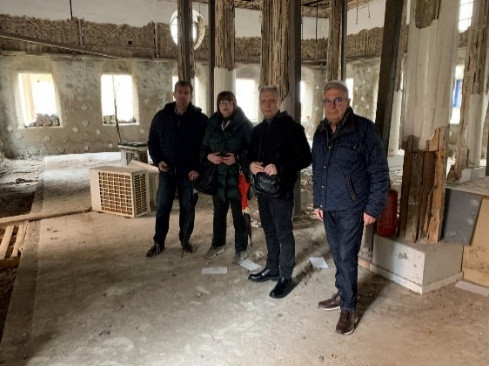
Address: Corner of Kyprou and Kentavron Streets – Jewish Martyrs of the Occupation Square
Visits and guided tours are available by appointment through the Community office.
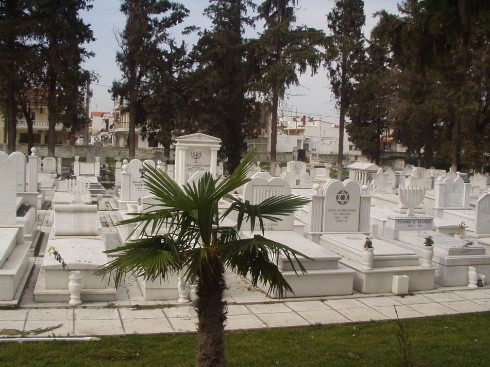
Jewish Cemetery
The Jewish cemetery of Larissa was not destroyed by the Nazi occupiers, as happened in other cities; however, it did serve as an execution site for Greek resistance fighters. The Community continues to use it to this day, viewing its upkeep as a sacred duty.
A visit to Larissa’s Jewish cemetery holds particular cultural interest, since its gravestones “tell” the history of the Jewish Community from the early 20th century to the present. In coordination with the Community, guided tours can be arranged for groups wishing to explore history in this way and to learn about the laws, customs, and symbols that govern the solemn chapter of death according to Jewish tradition.
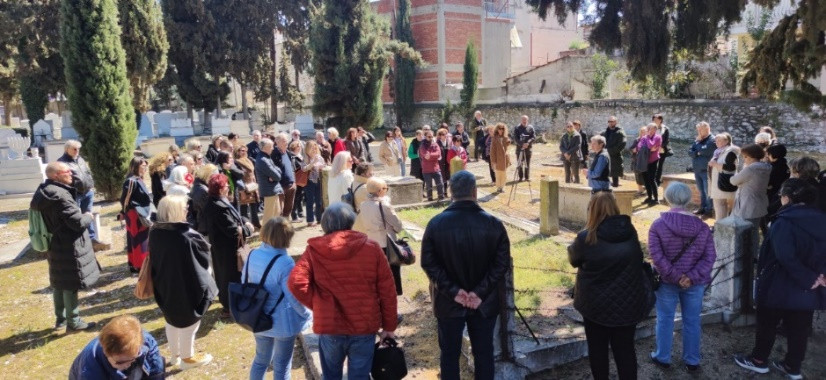
Visits and guided tours available by appointment through the Community office.
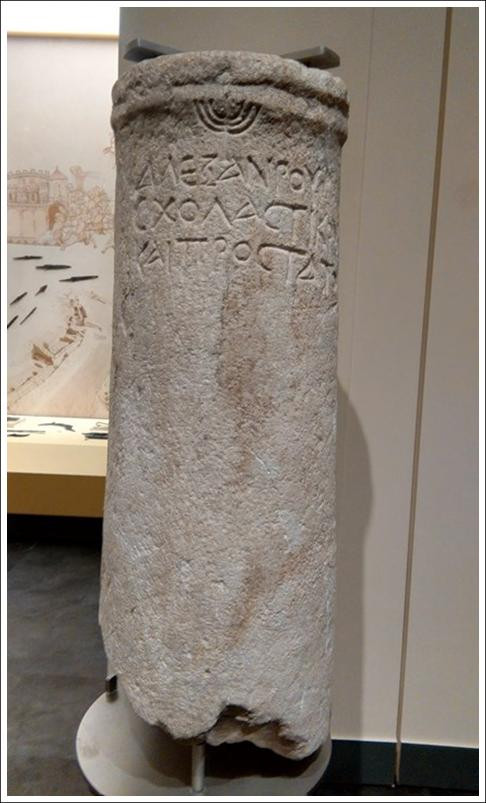
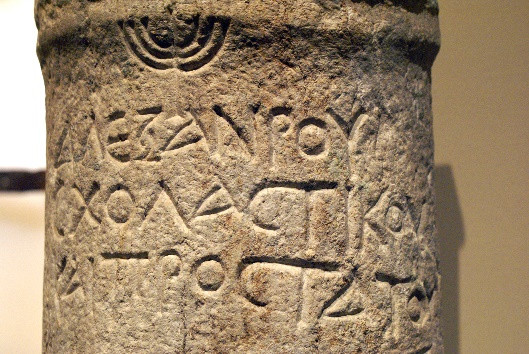
Marble Column with Seven-Branched Menorah
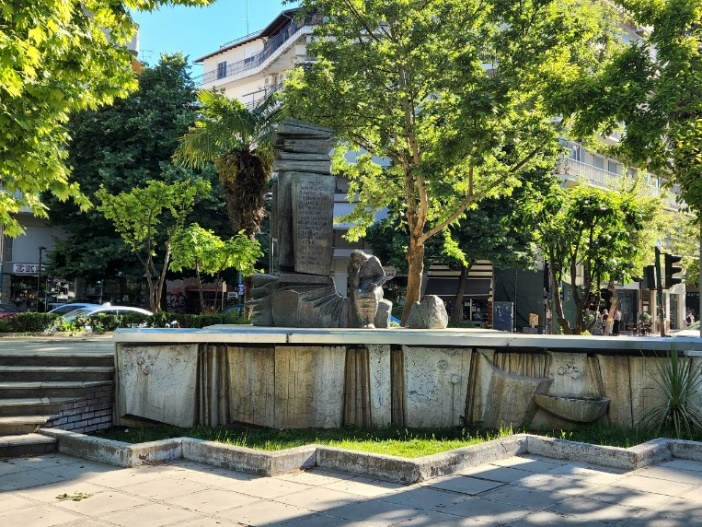
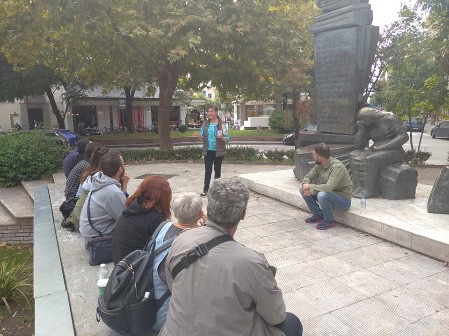
Jewish Martyrs of the Occupation Square – Holocaust Memorial
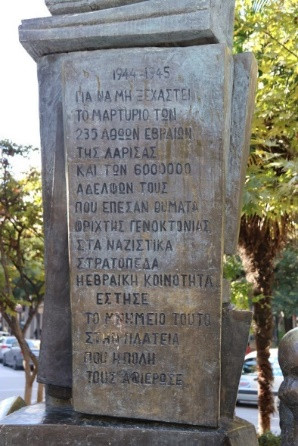
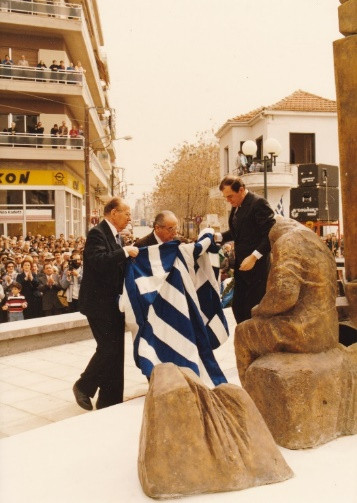
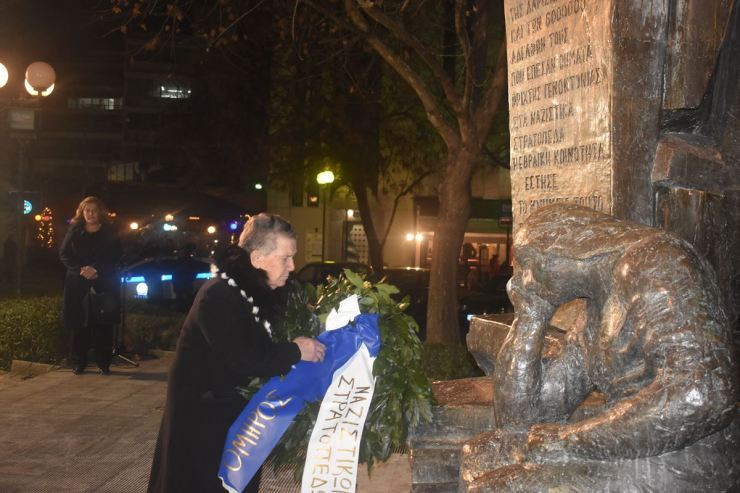
On a specially designed elevation within the square, the Jewish Community of Larissa erected the first Holocaust memorial in Greece, dedicated to the victims of the Shoah.
The monument is the work of sculptor Giorgos Houliaras, who used large bronze forms to create a piece that is both imposing and symbolically austere. It depicts a female figure in a dramatic pose and expression, standing beside a vertical column engraved with a commemorative epigram honoring the 235 Jews of Larissa who took their last breath in Auschwitz.
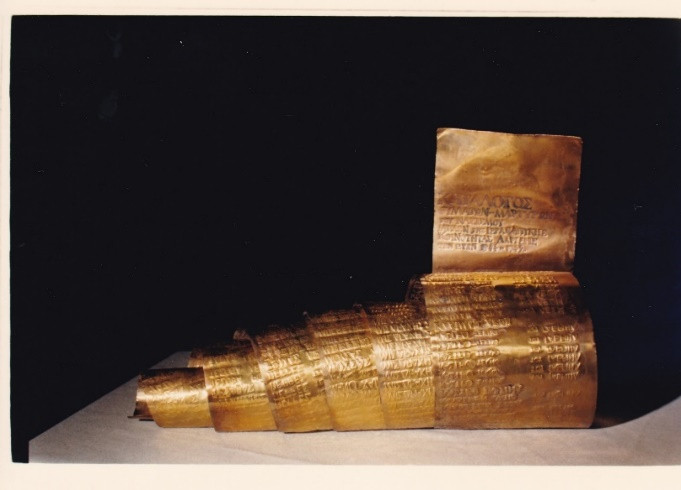
On the day of the ceremony, a velvet box was placed in a specially designed cavity at the base of the monument. Inside the box was a copper scroll engraved with the names of all the Jewish residents of Larissa who perished in the Holocaust. The following day, the sculptor sealed the cavity, ensuring that the names of the victims would be preserved in history for eternity.
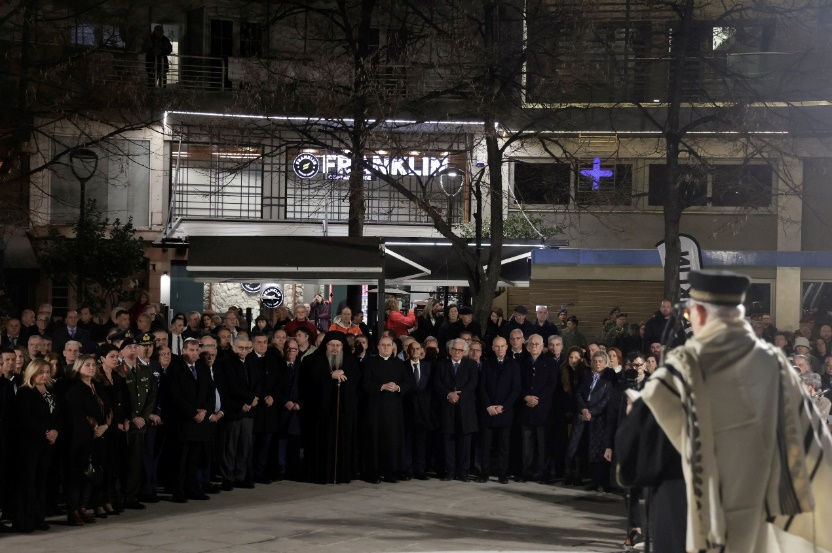
The Holocaust Memorial is a significant landmark in the city and has also been included in Larissa’s Network of archaeological and cultural landmarks. Although there have been occasional acts of desecration, the majority of citizens respect and honor the monument.
It serves as a place of visitation for students, university groups, associations, and tourists from around the world. The Jewish Community organizes educational activities there, designed for various age groups, aiming to offer experiential approach of concepts such as racism, democracy, solidarity, tolerance, and more.
During the ceremonies held each year on the National Holocaust Remembrance Day, the square is filled with people, and the atmosphere resonates with emotion and reverence.
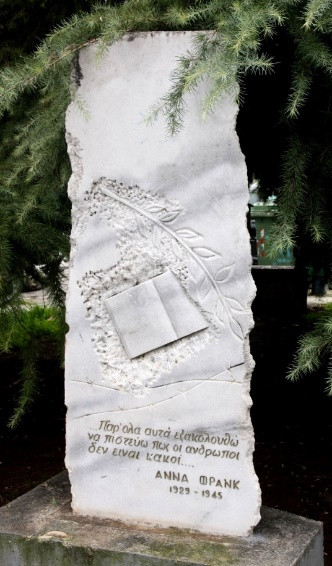
Anna Frank Square and Memorial Column
In the figure of the tragic young Jewish girl, the 1,500,000 children — the most innocent of the Holocaust’s victims — are commemorated. This symbolism is honored through the student events held there each year on the occasion of the National Holocaust Remembrance Day, aiming to raise awareness among young people about racism, antisemitism, and intolerance. These events have become an important institution for the educational community of the city.
Anna Frank Square (Erythrou Stavrou – Nirvana – Elladiou – Nikis St.)
behind the General Hospital of Larissa
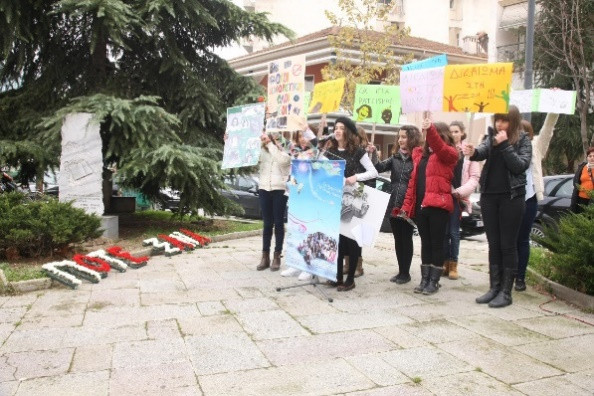
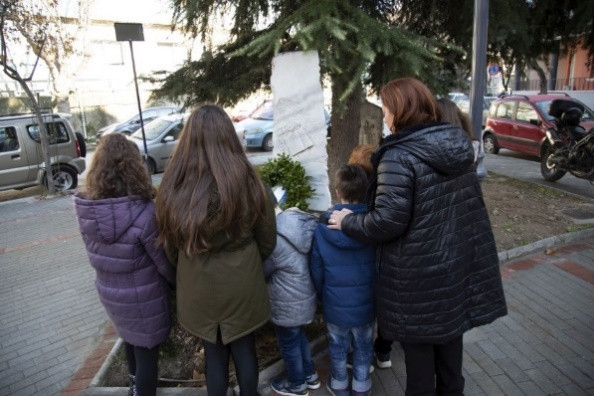
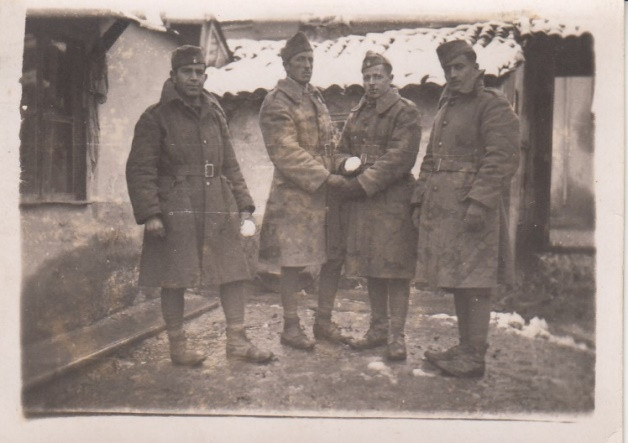
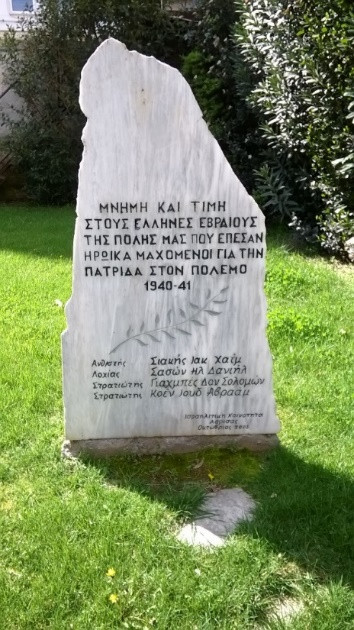
Commemorative Stele for the Jewish Soldiers of Larissa Fallen in World War II
The monument, made of white marble, is the work of sculptor Kostas Dais from Larissa. It bears a monumental inscription along with the names of the fallen heroes.
Address: 29 Kentavron Street – Larissa (within the courtyard of the Ets Haim Synagogue)
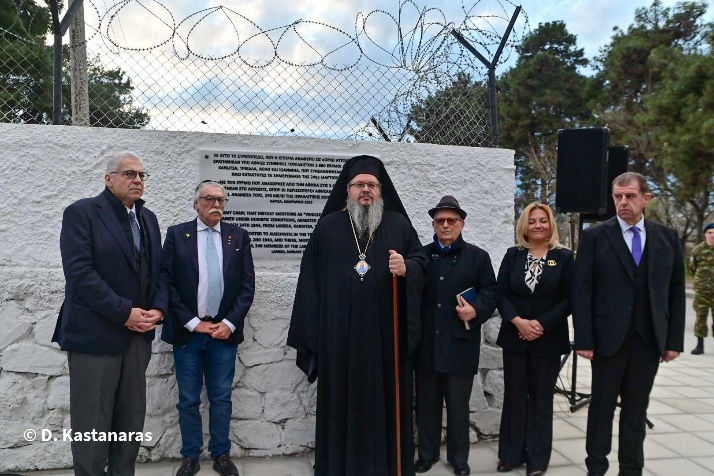
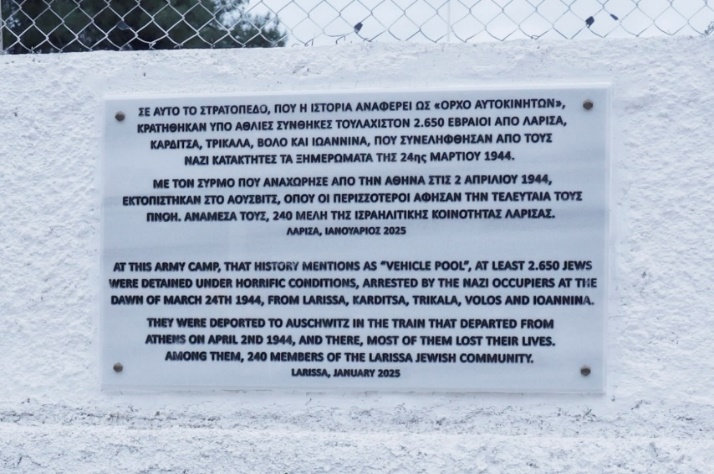
Commemorative Plaque at Bougas Camp
Out of the 240 Jews from Larissa, only six returned.
The inscription, written in two languages, marks the historical weight of the location and serves as a lasting call to vigilance against intolerance and hatred.
Address: 97 Farsalon & Rodopoulou – Larissa
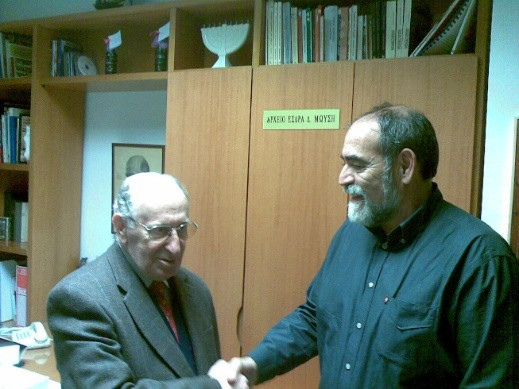
The Esdras Moissis Archive
Though preserved in its original form, the archive has also been digitized, thanks to the initiative and support of the Jewish Museum of Greece and a grant from the United States Holocaust Memorial Museum in Washington, D.C. It remains open to all historians and researchers who wish to delve into its invaluable contents.
Address: 29 Kentavron Street – Larissa, 1st floor, Office of J.C.L.
Access to the Esdras Moissis Archive and use of its material are subject to regulations
(information available at the JCL office)
- “The Jewish Community of Larissa Before and After the Holocaust” – Esdras D. Moissis – Jewish Community of Larissa, 2000
- “Larissa: 8000 Years of Youth” – Municipality of Larissa, 2008
- Archive of Documents and Photographs of the Jewish Community of Larissa
- Private Photograph Collections of Members of the Jewish Community of Larissa
Text Editing: Alina Moissis – JCL Director
Production – Printing: Gospasaniotis Alexandros
JEWISH COMMUNITY OF LARISSA
With the kind support of the Region of Thessaly
June 2025